Adding online coaching to your personal training business does not mean abandoning your in-person clients — and done correctly, it does not mean working more hours either. The trainers who make this transition successfully in South Africa do three things: they build structured programs their clients can follow independently, they charge for those programs as products rather than sessions, and they run everything through one system so the admin does not become a second job. This guide walks through exactly what that looks like from a Cape Town personal trainer’s perspective, and what the numbers actually work out to in ZAR.
This is not a guide to becoming an online personal trainer or getting an online coaching certification. If you are already qualified and already running an in-person coaching business, this is about the transition — how to add an online layer to what you already have without disrupting what already works.
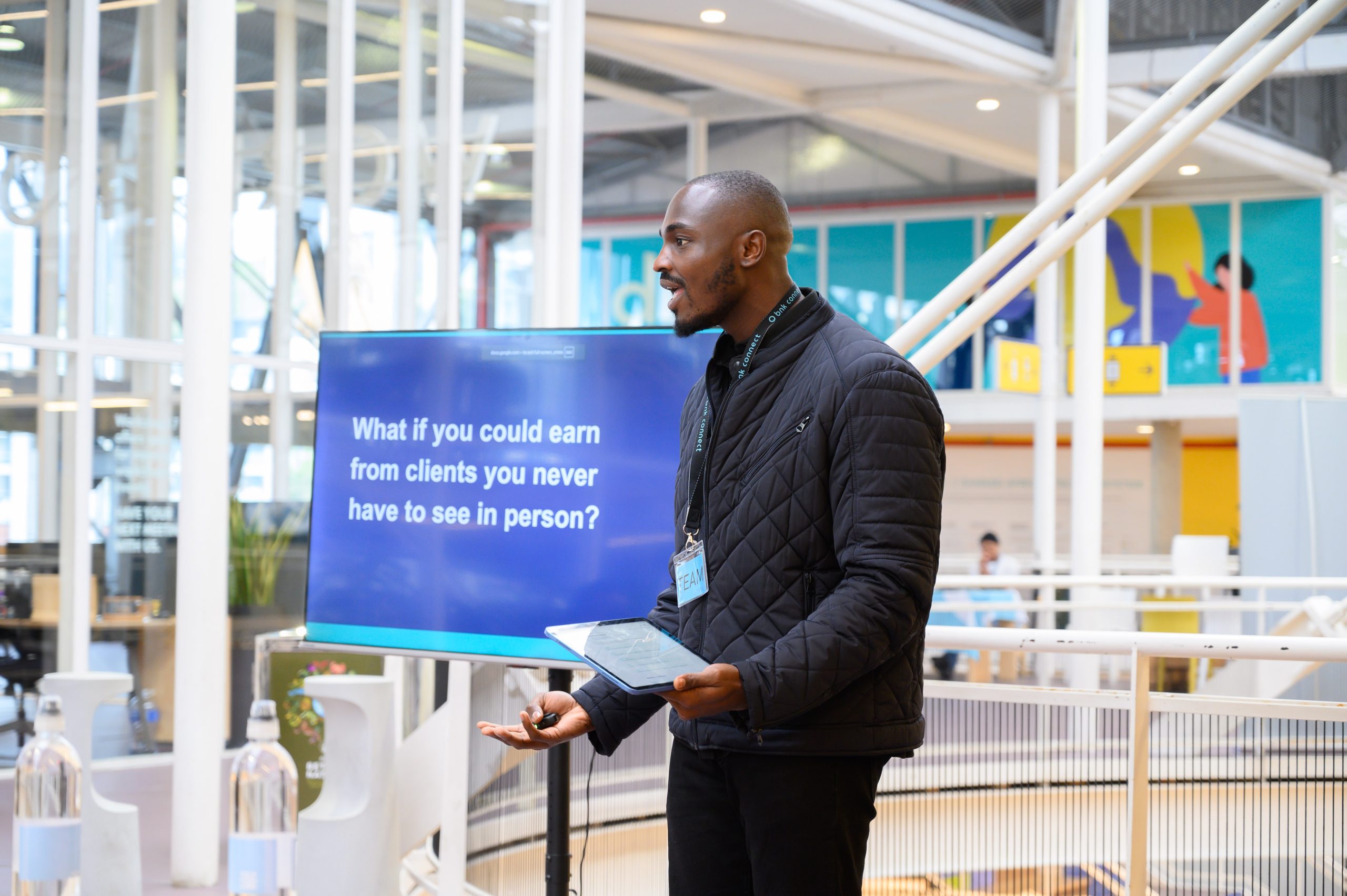
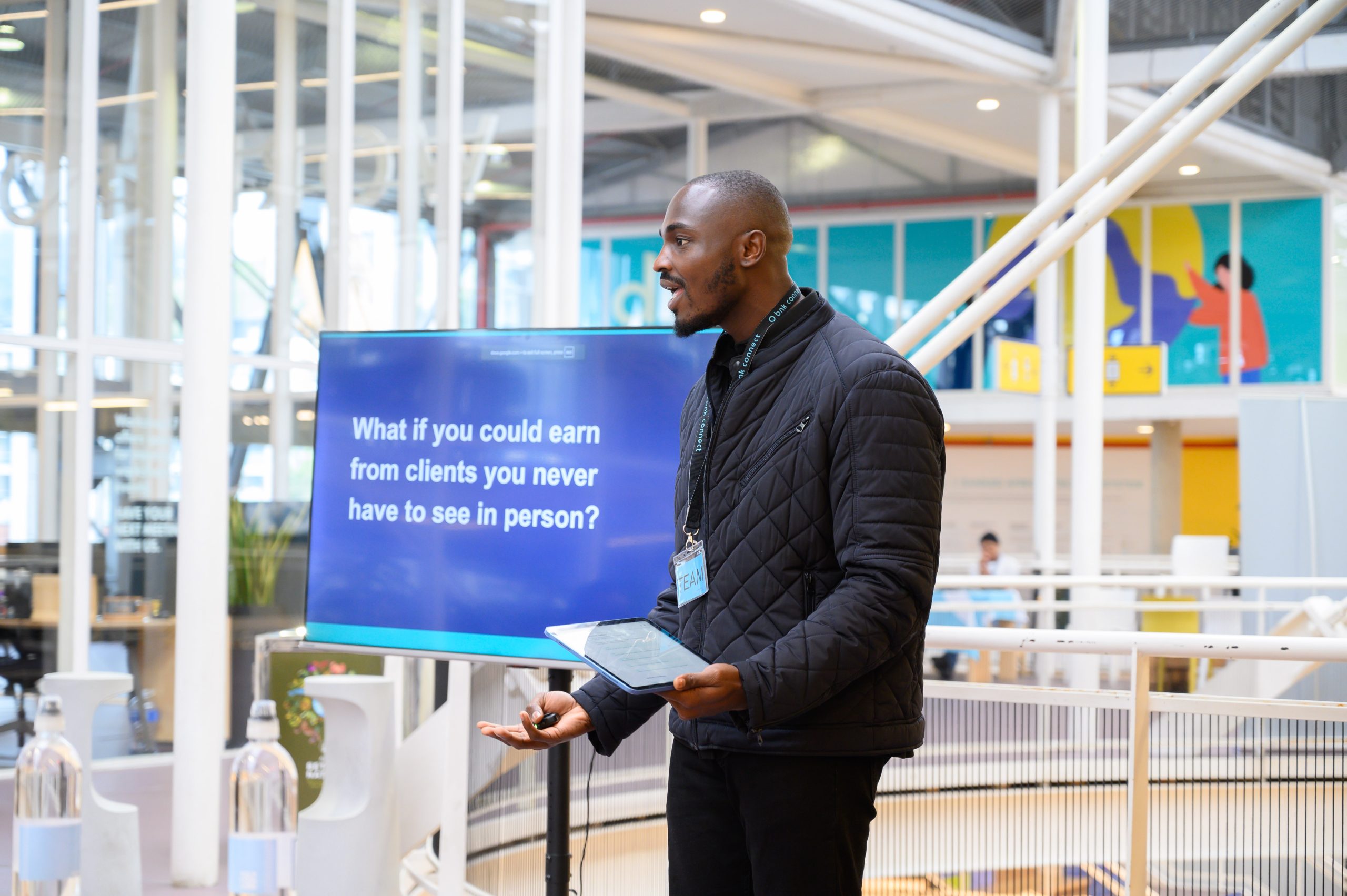
I run a workshop tour for South African personal trainers focused on this exact transition. At our most recent Cape Town workshop, half the coaches in the room were sitting with the same question — how to add online coaching to what they already do, without losing what already works. What follows is what I have seen work, and what I have seen fail.
What “adding online coaching” actually means
Online coaching in 2026 is not personal training over Zoom. It is not posting workouts on Instagram and hoping someone pays for them. And it is not the free advice you already give clients in WhatsApp voice notes.
Online coaching is a coaching model. You build a structured program — a set of workouts, nutrition guidance, check-ins, and progress tracking — and you deliver it to clients who follow it in their own time, in their own gym, at their own pace. You review their progress, adjust their plan, and coach them through the outcome. You do it for a fixed monthly fee or a fixed program price.
The important shift: your income is no longer capped by how many hours you can be in a gym. You can coach more clients per week without adding more session hours, because the delivery is asynchronous. A trained-body-of-work replaces a rented hour.
For personal trainers already running in-person clients, the model that actually works is what we call hybrid coaching: you keep your in-person clients, you add online clients on top, and you use the same system to manage both. You do not stop being a personal trainer. You add a business layer to your personal training.
The three transitions we see most in the room
At Cape Town workshops we consistently see three coach archetypes wanting to make this transition. Each has different starting friction and each fails for different reasons if it goes wrong.
The private gym owner adding online. A trainer running a private studio with 10-15 in-person clients they see every week. Their income is capped by their hours and the space they rent. They want to keep coaching in person, but add income streams that do not require them to be in the studio. The biggest mistake this trainer makes: trying to run online clients the same way they run in-person clients — daily WhatsApp check-ins, ad hoc program adjustments, no structure. Within two months the online work eats their in-person hours and the whole thing collapses.
The online-only coach adding in-person. A trainer who has built an online client base — often through Instagram or working under a larger online coaching brand — and now wants to run in-person clients out of a studio to build their own coaching business. Their friction is the opposite: they have systems for online delivery but no local reputation and no space. The mistake here: assuming an online audience will convert to paying in-person clients at scale without local marketing. It usually will not.
The mobile coach going structured. A trainer who trains clients in their homes, in gyms, or in parks — no fixed studio, no fixed program, everything ad hoc. They earn well per hour but they cannot scale because everything runs off memory and WhatsApp. Their transition is not just online, it is structured. The mistake: continuing to do everything manually while trying to serve more clients. The admin overhead becomes the ceiling.
The pattern that connects all three: the coaches who fail try to run a coaching business without a coaching system.

The math on why this matters
The income difference between in-person only and hybrid coaching is significant, and it is not marketing hype — it is a maths exercise.
A South African personal trainer coaching in-person clients only, at market rates, running a realistic weekly load, earns approximately R29,400 per month across a fully booked schedule.
The same trainer, adding a hybrid layer — a structured online program at a modest fee, sold to clients they already have relationships with or reach through their existing audience — earns approximately R44,400 per month. Same coach. Same hours. Different model.
That is R15,000 a month, or R180,000 a year, sitting on the other side of one transition.
The math works because online clients are not paid per hour. They pay for outcomes over a program period, and the program delivery is largely asynchronous. Ten online clients paying R1,500 for a 12-week program produce R15,000 without a single additional hour of face-to-face session time.
What it actually takes
Adding online coaching to your business requires five things. If any of them are missing, the transition breaks.
One — Structured programs, not ad hoc plans. Your online clients cannot ask you a question in real time every time they train. The program has to guide them. Weekly training structure. Nutrition parameters. Progress benchmarks. Check-in cadence. Everything written down once, delivered many times.
Two — A single system for delivery. Programs need to sit somewhere your client can access at any time. Videos, written workouts, nutrition guides, progress trackers. Not scattered across WhatsApp voice notes and Google Drive folders. One system. One place.
Three — A billing rhythm your clients understand. Online clients pay monthly or per program. You need a way to invoice, take payment, and remind without chasing anyone. Manual EFT tracking is the single fastest way to burn out.
Four — Progress tracking clients can see. Retention on online coaching lives or dies on whether the client feels progress. If they cannot see their own improvement, they cancel at month three. Your system needs to show them what they have done and how far they have come.
Five — A boundary on your time. This is the one most trainers miss. Online coaching without boundaries becomes a 24/7 WhatsApp job. Fixed check-in times. Fixed response windows. Communicated to clients up front. The freedom of asynchronous delivery only works if you defend it.
Miss any one of these, and you end up doing more work for the same money. Do all five, and the numbers I walked through above become achievable.
The mistake most trainers make
Almost every trainer who tries to add online coaching starts by trying to do it with tools they already have. A Google Sheet for programs. WhatsApp for delivery. EFT for payment. A Google Drive for videos. A separate note somewhere for progress.
It fails within eight weeks. Not because the trainer is not skilled — because the admin overhead of running five clients through five separate tools makes it impossible to run twenty. And twenty is the number at which the income actually shifts.
The trap is that at three or four online clients, the manual system feels manageable. So the trainer scales. And somewhere between eight and twelve clients, the tracking breaks, the check-ins start being missed, the invoices go out late, and the client experience drops. Then the churn starts.
What actually works is starting with a coaching system from client one. Not because you need it for one client — because the muscle memory of using a system means when you scale to fifteen, the system scales with you.
If you want to work through these five essentials in your own business- l have put them into a downloadable checklist you can print, tick through and keep on your desk. Enter your details below to get it in your inbox in the next two minutes Download the checklist
Where to start
If you are a South African personal trainer thinking about this transition, three practical next steps:
First — Audit your current business honestly. How much time are you spending on admin per week? How much of your income comes from hours you personally coach? What percentage of your clients would pay you for a program to follow themselves, if they trusted the program?
Second — Design one online program before you sell it. Not perfect. Not launched. Just built. Four to eight weeks. Structure written down. Delivery method chosen. Pricing decided. You do not need to sell anything until you have something to sell.
Third — Pick a system before you have clients on it. Not after. The system is what makes this scale. Personal trainers in South Africa running successful hybrid businesses run them on BNK Connect — a coaching business system built specifically for the South African market. Client management, program delivery, invoicing, and progress tracking in one place, priced in ZAR
Become an online fitness coach
The workshop tour
I run a live workshop across Cape Town for personal trainers making this exact transition. It is free, 60 to 90 minutes, and covers the model, the math, and the mechanics in more depth than any article can. If you want to attend the next one, register at bnkconnect.com/hybrid-coaching-workshops.
FAQ
How much does it cost to add online coaching to a personal training business in South Africa?
The upfront cost is low. A coaching business system runs from around R249 per month. Program design is time, not money. Marketing to your existing client base costs nothing. The actual investment is the six to eight weeks of building your first program before you sell it.
How many online clients does a personal trainer need to make it worthwhile?
The maths starts making sense at around ten online clients paying R1,000 to R1,500 per program period. Below that, the effort of running a hybrid model is not yet justified. Above ten, it accelerates.
Can I add online coaching without losing my in-person clients?
Yes. Most successful hybrid coaches keep their in-person work and add online as a second income layer. Some in-person clients also become online clients — following a program between their in-person sessions. The two models are not mutually exclusive.
What is the difference between online personal training and hybrid coaching?
Online personal training usually means live video sessions — you are still trading time for money. Hybrid coaching means delivering structured programs that clients follow independently, with your oversight. The income model is fundamentally different.
How long does the transition to hybrid coaching take?
Realistically, three to six months from starting to build your first program to running a stable ten-client online layer. Coaches who rush it typically burn out or lose client trust. Coaches who do it structured typically compound.