There is a question most personal trainers in South Africa have never actually answered.
Not roughly. Not a guess. Actually sat down and calculated it.
How much are you earning right now ?
Short answer: a full in-person book tops out around R29,400 a month for many South African trainers. Adding online sessions and program sales alongside it — the hybrid model — can lift that to roughly R44,400 without adding hours. Here’s the maths, the mistakes to avoid, and what the week actually looks like.
For most trainers working full in-person books, the number looks something like this. Seven clients, three sessions each per week, R350 per session. That is R29,400 a month. You are busy. You feel productive. But the number is not growing.
And if you lose one client, you feel it immediately.
This is the income ceiling most South African personal trainers live inside without realising it is a ceiling. Not because they are not good coaches. Not because they are not working hard enough. Because the model they are working inside only allows them to earn from people they physically see.
Why working harder does not solve this
When a trainer wants to earn more, they typically try one of four things.
They work longer hours. They raise their prices and risk losing clients. They add group sessions, which is a different skill set not everyone can pull off. Or they start selling programs over WhatsApp, which works until they have five clients and then falls apart because payments get lost and programs get buried in a chat thread.
All four approaches keep the trainer inside the same model. You only earn when you are physically present.The ceiling stays
What hybrid coaching actually means
There is a version of this conversation that loses trainers immediately — the idea of becoming an online coach, rebuilding from scratch, competing with international platforms, starting over.
That is not what this is.
Hybrid coaching means you coach some clients face to face, as you always have. And you coach other clients online. Or both with the same client.
You are not leaving your in-person business. You are adding a second income stream on top of it.
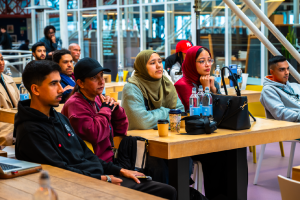
Anver Alexander, owner of Heat Studios in Century City and a coach with over fifteen years in the South African fitness industry, spoke at the BNK Connect Hybrid Pivot workshop in Cape Town about what he has seen in the market. His view: the coaches who build sustainable businesses are the ones who are not dependent on any single income source. Online clients who cannot make it to a studio consistently become in-person clients once they build a relationship with a coach. Both channels feed each other.
The two ways to earn online
There are two practical income streams that work alongside an existing in-person coaching business.
The first is online sessions. A trainer who charges R350 for an in-person session can charge R250 for an online session — lower price point, but zero travel, no equipment setup, no studio space required. Clients who cannot make it to the gym because of schedule, location, or budget can still train with you. And online clients often become in-person clients. They see results. They build a relationship with you. Eventually they want to come in.
The second is program sales. A trainer builds a structured training program once — weight loss, strength, core stability — and sells it to multiple clients. R2,500 per program. You create it once. You sell it more than once. This is not trading time for money. This is selling your knowledge.
What the numbers actually look like
Keep the same in-person base. Seven clients, three sessions each, R350 per session. R29,400 a month. Nothing changes there. Add five online clients at two sessions each per week at R250 per session — that is R10,000 a month. Sell two programs at R2,500 each — that is R5,000 a month. Total: R44,400 a month.
| Income Stream | In-Person Only | Hybrid |
|---|---|---|
| In-person (7 clients x 3 x R350) | R29,400/month | R29,400/month |
| Online sessions (5 x 2 x R250) | - | R10,000/month |
| Program sales (2 x R2,500) | - | R5,000/month |
| Total | R29,400/month | R44,000/month |
| Difference | +R15,000/month . +R180,000/year |
The difference between in-person only and hybrid coaching in this model is R15,000 a month. Over a year that is R180,000 in additional income — with no extra hours added to the week. The online sessions fill gaps that already exist in your schedule. The program sales happen while you sleep.
See what this could look like in your own business. BNK Connect is live now.
What a hybrid coaching week actually looks like
Monday to Friday, you train your in-person clients as normal. Between sessions, you schedule two or three short online sessions per day. One to two hours per week goes into updating and managing programs. Fifteen to twenty minutes each day handles check-ins with online clients.
You are not doubling your workload. You are filling empty time with revenue.
The mistake that derails trainers who try to go hybrid
At the BNK Connect Hybrid Pivot workshops run in Cape Town this year — at Heat Studios in Century City on 18 April and at First Principles Gym on 30 May — these five mistakes came up every time as the reasons trainers who try to add online coaching either give up or fail to scale it.
- Sending generic programs instead of personalised ones: online clients churn faster than in-person clients when they feel like they are following something built for someone else.
- Not setting expectations clearly: online clients need to know when you will respond, when check-ins happen and what the structure looks like. Without that clarity, they ghost.
- Underpricing because they assume online means less value: it does not. A well-structured online coaching relationship often delivers more accountability and consistency than in-person sessions.
- Running everything through WhatsApp with no billing system: payments get lost. Clients deprioritise sessions they feel they can reschedule indefinitely. No billing structure means no professional relationship.
- Treating online clients as secondary: the coaches who build successful hybrid businesses treat every client with the same standard of professionalism regardless of where the session happens.
The system question
You already know how to do this. You write training programs. You coach technique. You communicate with clients every day. The only thing that changes when you add online coaching is the delivery method.
But delivery method matters more than most trainers realise. A client who receives a voice note in a WhatsApp thread with exercises and a PDF from Google has a completely different experience to a client who logs into a platform, sees their structured program, tracks their progress week by week, and has a direct line to their coach that is linked to their profile.
The second client stays. The first client ghosts after two weeks. The difference is not coaching quality. It is infrastructure.
What BNK Connect is building for South African trainer
BNK Connect is a business management platform built specifically for personal trainers and service providers in South Africa. It handles the infrastructure side of hybrid coaching — client profiles, program delivery, billing [internal link ? EFT payment post], proposals, and communication — in one place.
Trainers attending the Hybrid Pivot workshops set up their accounts live in the room. By the end of the session they have a profile, a client loaded, a program assigned, and billing configured. The point is not to sell software. The point is to remove the friction that stops most trainers from actually starting.
A trainer who leaves the session with an active account and their first client loaded is far more likely to still be using the platform in ninety days than one who goes home with a notebook full of ideas and no system to put them in.
The ceiling is optional
R29,400 a month is not a bad income. But it is a ceiling most South African personal trainers hit without knowing there is a way to raise it without working longer hours or changing the business they have already built.
The trainers growing their income right now are not the ones working more. They are the ones who have added a second income stream on top of the one that already works.
If you are a personal trainer in South Africa and want to explore what hybrid coaching could look like for your business, BNK Connect is live now. Try it for R1 for your first 7 days — and if you’re not ready to upgrade, you roll onto the free plan for up to 2 clients, no payment required. Paid plans from R249 per month. No commission on trainer fees.
Frequently asked questions
How much can a personal trainer earn in South Africa? Many full in-person books top out around R29,000–R30,000 a month. Adding hybrid income streams — online sessions and program sales — can lift that meaningfully without extra hours.
What is hybrid coaching? Coaching some clients in person and others online (or the same client both ways), so you add an income stream on top of your in-person business rather than replacing it.
Do I need to become a full online coach? No. Hybrid means keeping your in-person clients and adding online alongside — not rebuilding from scratch or competing with international platforms.
How do personal trainers earn while not training? By building a structured program once and selling it to multiple clients (around R2,500 each) — your knowledge, sold more than once.